
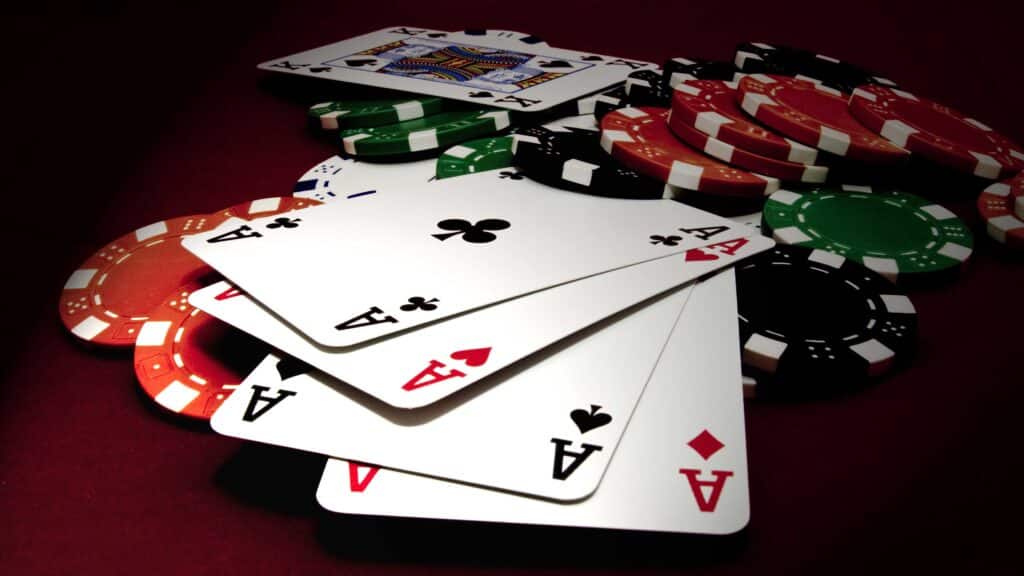
Pai Gow Poker uses familiar poker rankings, but the wager is settled by comparing two hands rather than one. The player sets a five-card high hand and a two-card low hand from seven cards. A high-card result can decide either comparison, yet winning one comparison alone normally does not win the main wager.
Poker Hand Rankings and Draw Rules reviews standard card ranks, while Caribbean Stud Rules illustrates why casino-poker variants require their own procedures. Before playing, read the exact house way, joker rule, tie treatment and payout schedule.
Start with the two-hand settlement structure
The five-card hand must rank higher than the two-card hand under the game’s setting rules. The player then compares each hand with the corresponding dealer or banker hand. Winning both usually wins the main bet, losing both loses it, and splitting the comparisons usually produces a push.
A high-card five-card hand is possible when there is no pair, straight, flush or higher combination. The hand is compared from its highest card downward through the remaining kickers. In the two-card hand, a pair beats two unpaired cards; otherwise the higher first card and then the second card determine rank.
Do not interpret “high card wins” as a special shortcut that ignores the second hand. A player can hold the higher five-card high-card hand and still push or lose the overall wager because the two-card hand does not beat the dealer.
Compare kickers in the correct order
When both five-card hands contain no pair or better, compare the highest card. If equal, compare the next highest unmatched card, then continue until the tie is broken. Ace-high beats king-high, but an ace-high hand can still lose to any pair.
For example, A-J-9-6-3 beats A-J-8-7-4 because the first two cards tie and the nine exceeds the eight. A-Q-7-5-2 loses to A-K-4-3-2 because the king is compared immediately after the tied ace. Suits usually do not break ordinary high-card ties unless the published variant says otherwise.
The Pennsylvania Pai Gow Poker ranking rule provides an official example of card, joker and hand-ranking definitions. It states that identical ranks are ties at the hand-comparison stage; the complete chapter and casino rules determine how the wager treats that tie.
| Comparison | First rank checked | Next step if tied |
|---|---|---|
| Five-card high-card hands | Highest card | Compare each kicker downward |
| Two-card unpaired hands | Higher card | Compare second card |
| Player versus dealer copy | Published tie rule | Apply wager settlement |
| Seven-card side bet | Side-bet paytable | Independent of main comparison |
Understand copies and dealer-favouring ties
Many Pai Gow Poker rules use “copies” or dealer wins ties when a player hand is exactly equal to the corresponding dealer hand. This convention contributes to the house edge. Other published procedures may call the comparison a tie before applying a separate settlement rule.
Read the operator’s language carefully: “hand tie,” “copy” and “push” are not always interchangeable. A tied low hand can cause the main wager to lose if the high hand also loses, or produce a push if the other hand wins, depending on the rules.
Online software should display both arranged hands and the comparison result. Save a screenshot or hand identifier if settlement is disputed. The correct question is which cards were assigned to each hand and which tie rule was active—not which seven-card collection looked stronger overall.
Set legal hands and avoid a foul
The two-card low hand cannot outrank the five-card high hand. Placing a pair in the low hand while leaving only high cards in the five-card hand can create a fouled hand under standard rules. A foul normally loses without normal comparison.
The best arrangement is not always the one that maximizes the five-card hand. Splitting two pairs, straights or flushes can improve the chance of winning both comparisons. House-way charts provide a consistent dealer setting procedure and can be useful reference points for the player.
When the interface offers automatic arrangement, inspect the result before confirming if changes are permitted. Auto-setting may follow the casino house way rather than a strategy optimized for a specific banker, side bet or commission structure.
Account for the joker, banking and commission
Pai Gow Poker commonly uses a 53-card deck with a joker that acts as an ace or completes certain straights and flushes, but variants differ. A fully wild joker would change rankings and strategy substantially. Confirm its permitted uses.
Traditional games may charge commission on winning main bets, while commission-free variants modify a dealer outcome—often a specific dealer hand—to recover house advantage. The headline “no commission” is not the same as no rule cost.
Player banking or co-banking can alter who wins copies and who covers wagers. Online versions may not offer banking. Do not copy a strategy table from a banked casino game into a simplified online variant without matching every rule.
- Arrange a valid five-card high hand and two-card low hand.
- Compare high cards and kickers in descending order.
- Check whether copies favour the dealer or push.
- Match the joker and commission rules.
- Evaluate side bets as separate wagers.
Review side bets independently
Fortune-style and envy side bets usually pay according to the seven-card hand without requiring both arranged hands to beat the dealer. Their paytables can look attractive because rare combinations receive large multipliers, but they carry a separate expected cost.
A high-card main hand provides no special side-bet advantage unless the side-bet rules explicitly say so. Calculate or verify the side-bet return using its own probabilities and payout table. Do not let a possible bonus dictate a poor two-hand arrangement after cards are dealt.
Set a total wager limit that includes main and side bets. Adding a $5 side bet to a $10 main wager increases turnover by 50%, even when the interface presents it as a small optional feature.
House-way strategy is especially relevant with medium-strength hands. Two pair, a straight with a pair, or four of a kind can be arranged in several legal ways. The best split depends on the chance of winning both hands and on the banker’s setting method. Memorizing one “high card wins” phrase cannot replace a complete arrangement chart.
Commission should be included in the result ledger. A $100 winning wager paid at even money with a 5% commission produces $95 of net winnings, while a push returns the stake. Commission-free variants may appear simpler but can have a special dealer hand that converts an otherwise favourable result into a push or loss.
Online tables can settle quickly, so use the game history rather than trying to reconstruct a seven-card arrangement from memory. A reliable history should show dealt cards, player setting, dealer setting, comparison of both hands and the final payout. Missing detail makes independent verification difficult.
Strategy references should match the active house way. A chart produced for a commission game with player banking may recommend different splits from a commission-free online table. Use the chart as a decision aid only after checking deck, joker, banker, copy and payout rules.
High cards matter in Pai Gow Poker, but they operate inside a two-hand game. Accurate play requires correct hand setting, ordered kicker comparisons and the active copy rule. Once those mechanics are clear, the player can distinguish a legitimate high-card win from a split result, a dealer-favouring tie or a fouled hand.