
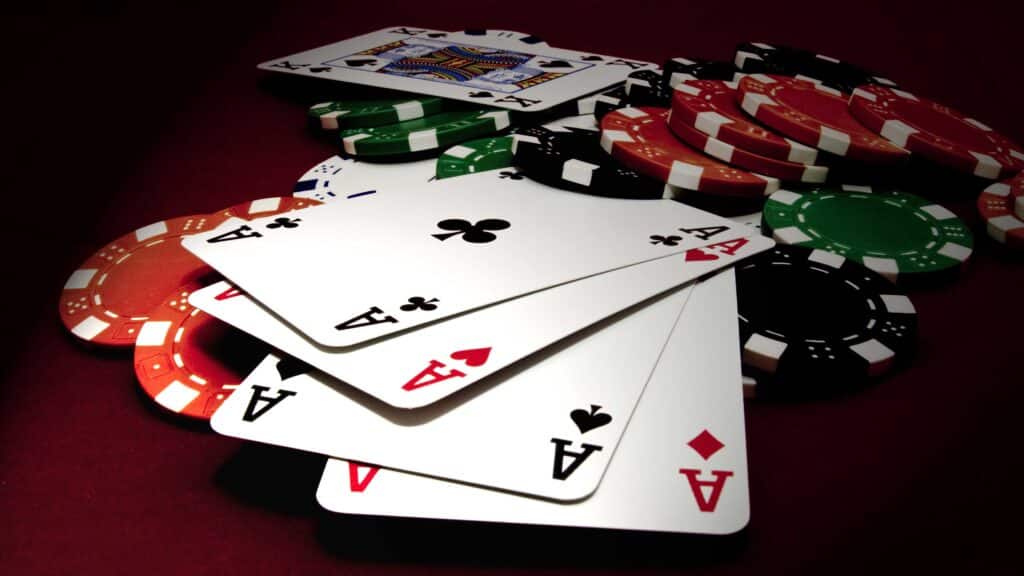
Texas Hold’em strategy is not a list of hands that always win. Each decision depends on position, stack depth, prior action, pot size, opponent range and future betting. Strong play begins by choosing a coherent range before the flop, then narrowing both players’ possible holdings as information arrives. The objective is to make higher-value decisions repeatedly, not to win every pot.
This guide focuses on a transferable decision process. It works with GambleRoad’s Texas Hold’em rules and play guide, fold-equity guide and range-balancing guide.
Position changes the value of every hand
Players acting later see more information before choosing. The button can open a wider range because fewer opponents remain and it will act last after the flop. Early position must be tighter because many players can call or raise and the opener will often act first later.
Position also changes realizable equity. A marginal suited hand may capture more of its theoretical value on the button through pot control and profitable bluffs. The same hand out of position may face bets without knowing whether a call will close the action.
Build preflop ranges, not isolated hand rules
| Situation | Range tendency | Reason |
|---|---|---|
| Early-position open | Tight and strong | Many players remain and postflop position is often poor |
| Button open | Wider | Only blinds remain and button acts last postflop |
| Facing an open | Tighter than first-in range | Original raiser has already shown strength |
| Short stack | More all-in or fold decisions | Reduced implied odds and less room after the flop |
| Deep stack | More suited and connected hands in position | Greater implied odds, but larger reverse-implied-odds risk |
Charts are useful starting points, but they must match game format, rake, stack depth and opponent behavior. A tournament with antes supports wider opening than a rake-heavy low-stakes cash game. Memorizing a chart without understanding those inputs creates brittle strategy.
Use pot odds to price calls
If the pot is $80 and an opponent bets $20, the final pot after a call would be $120. The call costs $20, so the break-even equity is $20 ÷ $120 = 16.67%. A draw with more than that equity may call before considering future action and rake.
Pot odds do not say how often an opponent bluffs or whether the player can realize all equity. A draw may face another large bet on the river, while a made hand can be dominated. Combine the price with a range estimate and the likelihood of future betting.
A flush draw with nine clean outs from flop to turn has roughly 19% chance to improve on the next card, so a pure one-card call at 25% break-even is not justified without implied value or additional winning paths. From flop to river with two cards to come, the probability is higher, but only if the player is guaranteed to see both cards for the current price.
Value betting requires worse hands that can call
A hand is not a value bet merely because it is strong. It is a value bet when enough worse hands will continue at the chosen size. On a dry board, a medium size may be called by several one-pair hands. On a coordinated board, a larger size can charge draws while still receiving calls from worse made hands.
List the opponent’s likely calls before betting. If the list contains mostly better hands and missed draws, checking may be superior. This range-based test prevents automatic betting with hands that are strong in absolute terms but weak against the continuing range.
Bluffs need blockers, fold equity and a credible story
A bluff wins when enough better hands fold. The required fold rate for a pot-sized bluff is 50% because the bettor risks one pot to win one pot. A half-pot bluff needs to work 33.3% of the time before considering equity when called.
Good bluff candidates often block the opponent’s strongest calls and unblock folds. A missed draw is not automatically a bluff; some missed draws block the hands the player wants the opponent to fold. The betting line should also represent plausible value hands from the player’s range.
Stack depth changes commitment thresholds
With 20 big blinds, a preflop raise and continuation bet can commit a large share of the stack. One-pair hands rise in relative value because there is less money behind. With 200 big blinds, the same one-pair hand can face multiple large bets and severe reverse implied odds.
Track effective stack, not personal stack. If one player has 60 big blinds and the other has 150, only 60 big blinds can be contested between them. Bet sizing and implied odds should be calculated from that effective amount.
Tournament rules and cash-game incentives differ
Tournament chips have changing utility because elimination matters and blinds increase. Bubble pressure and payout structure can make survival valuable. Cash-game chips retain direct monetary value and can normally be replenished, so chip expected value maps more directly to money.
Live tournament procedure also affects decisions. The Poker TDA rules require clear declarations, action in turn, visible cards and chips, and prohibit strategy tools at the table. A technically correct range is useless if an ambiguous gesture creates a binding action or a protected hand is folded by mistake.
Board texture helps decide which range has the strongest combinations. A high-card, disconnected flop often favors the preflop raiser, while a low connected flop can interact more strongly with a caller’s pairs and suited connectors. This does not mandate a bet; it changes which player can credibly represent value.
Bet size should follow the range objective. Small bets can target a wide range or deny equity cheaply on static boards. Large bets polarize toward strong value and bluffs, especially when the board allows many draws or future changes. Using the same size automatically on every texture makes the strategy easier to exploit.
Review decisions with a repeatable framework
| Question | Evidence to record | Common error |
|---|---|---|
| What ranges reached the spot? | Positions, actions and stack depths | Starting from one exact hand guess |
| What price was offered? | Pot size, bet size and rake | Using draw odds without call price |
| Which worse hands call value? | Likely pairs, draws and bluff-catchers | Betting because the hand feels strong |
| Which better hands fold to a bluff? | Blockers and opponent tendencies | Bluffing missed draws automatically |
| What changes on later cards? | Range advantage and nut distribution | Planning only the current street |
Review important hands away from the table using the information available at the time. Separate outcome from decision quality. A correct call can lose and a poor bluff can succeed; using the result as the only feedback encourages superstition.
Rake changes marginal decisions, especially in small pots and low-stakes cash games. A preflop call that appears slightly profitable before fees may become negative after the operator removes a percentage of the pot. Review charts and solver outputs using the actual rake structure, and distinguish theoretical equilibrium advice from adjustments justified by observed opponent mistakes.
A practical Hold’em improvement plan
- Study one game format and stack depth at a time.
- Build position-based opening and response ranges.
- Calculate pot odds before interpreting tells or timing.
- Describe the opponent’s continuing range before value betting.
- Choose bluffs using blockers and required fold rate.
- Track effective stack and future-street commitment.
- Review marked hands by decision process, not result.
- Monitor rake, tournament fees and table quality.
- Use bankroll limits that allow normal variance without loss chasing.
Winning Hold’em strategy is a chain of disciplined estimates. Position defines the starting range, price determines call thresholds, stack depth shapes future leverage and opponent ranges decide whether a bet is for value or as a bluff. No chart removes uncertainty, but a consistent framework makes errors visible and improvement measurable.