
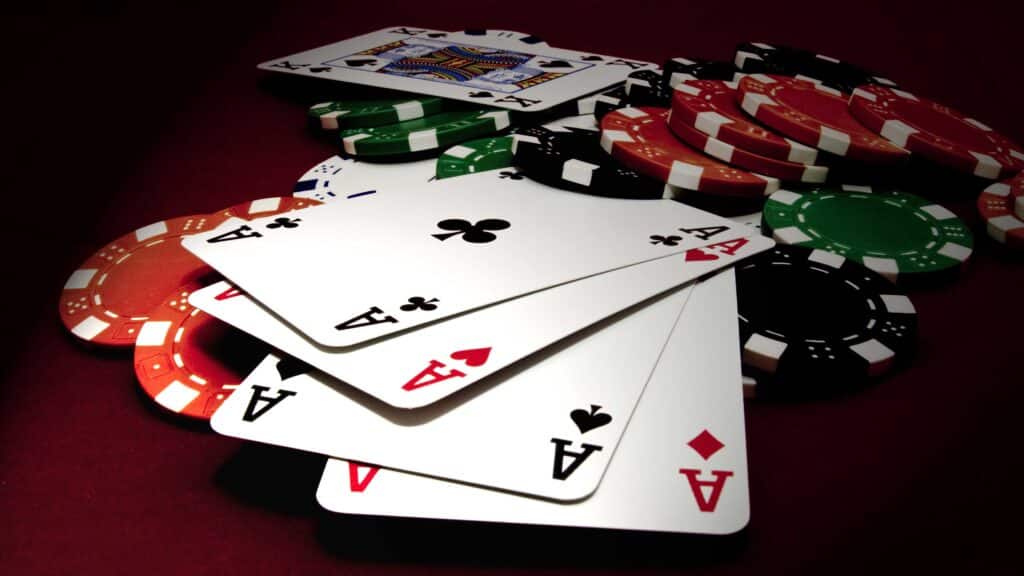
High-stakes poker is not simply the same game with larger chips. The rules may be familiar, but deeper effective stacks, stronger opponents, side arrangements, credit exposure and psychological pressure change the cost of every error. A player who is technically competitive at lower stakes can still fail after moving up too quickly.
The first high-stakes decision is whether to enter the game at all. Table quality, bankroll capacity, liquidity and the ability to leave matter before any preflop range is considered.
Table selection has more value than marginal tactics
A difficult lineup can erase a small theoretical edge. Record who is seated, effective stack sizes, straddles, rake or time collection, buy-in rules and whether the game is likely to continue. A prestigious table is not automatically profitable.
Estimate the weakest sustainable edge rather than focusing on one recreational player. If that player leaves, the game may become sharply negative. A seat-change, table-change or departure plan should be decided before ego becomes involved.
Private or semi-private games introduce additional questions: Is the game licensed? Who holds deposits? Are chips redeemable immediately? Does a host extend credit? Is there a dispute procedure? A soft lineup does not compensate for unreliable settlement.
GambleRoad’s low-stakes poker guide explains why rake and table composition matter at smaller games. At high stakes, percentage rake may fall, but absolute exposure and game-access risk increase.
Build the bankroll around effective-stack losses
Bankroll rules stated only in buy-ins can be misleading because a buy-in may represent 100, 200 or 500 big blinds. A $20,000 loss in a deep game is not equivalent to one standard buy-in if repeated reloads or straddles change the effective stack.
Model a bad session using realistic pots. Include set-over-set, large draws, multiway all-ins and the possibility that several high-equity decisions lose in sequence. Then compare that drawdown with liquid poker funds, not total net worth or available credit.
| Risk input | Example question | Control |
|---|---|---|
| Effective stack | How many big blinds can be lost in one pot? | Set a maximum seat depth |
| Session reloads | How many times can the player rebuy? | Precommit a cash limit |
| Game frequency | How often does this lineup run? | Keep reserves outside the game |
| Settlement | When are chips or markers paid? | Avoid unsecured credit |
A bankroll should absorb normal variance without forcing asset sales, borrowing or lower-quality financial decisions. Moving down is a control, not an admission of failure.
Deep stacks increase postflop error cost
As stacks deepen, one-pair hands lose relative value in large pots and reverse implied odds become more important. Preflop calls that are tolerable at 100 big blinds can create difficult dominated situations at 300 big blinds. Position becomes more valuable because later streets carry more money.
Track stack-to-pot ratio after each street. A small flop bet can preserve a high ratio and leave several large decisions. Large sizing compresses later play and may reduce the opponent’s ability to realize equity. Neither choice is universally correct; it should match range advantage, nut advantage and the hands that continue.
High-stakes players also attack capped ranges and sizing patterns more effectively. Balance matters against opponents who observe frequencies, but rigid game-theory imitation can be expensive when the assumptions are wrong. GambleRoad’s range-balance guide explains how value and bluff combinations interact with bet size.
Review the biggest pots by effective stack and decision tree, not by whether they were won. Results conceal errors in both winning and losing hands.
Account for rake, straddles and side arrangements
A high-stakes game may charge time instead of taking a percentage from every pot. Compare the hourly charge with expected hands and seat quality. In private games, hosting fees, mandatory tips or indirect costs can materially change the economics.
Straddles increase the effective blind and reduce the number of big blinds in each stack. A $100/$200 game with a frequent $400 straddle often plays closer to a shorter $200/$400 structure than the posted stakes suggest. Bankroll and preflop planning should use the actual live blind.
Running a board twice, insurance, swaps and staking arrangements change variance or ownership but not necessarily expected value. Put any agreement in writing before the hand. Define percentages, expenses, makeup, settlement timing and what happens if one party leaves.
Never treat casino or host credit as bankroll. Markers and informal loans create legal and relationship risks beyond poker variance. The ability to borrow can turn a predetermined loss limit into an open-ended exposure.
Protect decision quality under social pressure
High-stakes environments can create status pressure. Players may stay because the game is rare, because others are watching or because leaving appears weak. Those motives should not override the precommitted game-quality and loss criteria.
Monitor physical signs of declining judgment: rushed calls, repeated pot recounts, missed action, fixation on one opponent or willingness to play every straddle. A short break may restore attention; persistent impairment should end the session.
Do not use alcohol or stimulants as a performance plan. Sleep loss and emotional arousal can distort risk perception even when the player feels alert. GambleRoad’s large-loss recovery guide provides controls for preventing one bad session from becoming a financial chase.
Security also matters. Avoid displaying cash unnecessarily, use the cage for large transactions and plan transport. Do not discuss private game locations, balances or identifiable financial arrangements in public channels.
Before joining a streamed or publicly reported game, understand how footage, hole-card data and personal information will be used. Broadcast delay and production controls reduce some integrity risks but do not eliminate concerns about data access. Ask who can see cards, how devices are controlled and when the stream becomes public.
For private games, verify redemption before building a large chip balance. A small test cash-out can reveal whether settlement is direct, delayed or dependent on one host. Avoid arrangements where winnings remain as an unsecured ledger balance with no clear legal counterparty.
Game selection should be reviewed continuously, not only at the start. A profitable lineup can become poor after two seat changes, a straddle increase or the arrival of a stronger player. Set a reassessment trigger so that sunk time and social pressure do not keep the player seated.
Track hourly exposure as well as win rate. A game with large standard deviation can require more liquidity even if the estimated edge is positive. The bankroll must survive the path to the long run, not only the expected endpoint.
That reassessment should be written into the session plan.
Document it.
Use promotion criteria instead of aspiration
Before moving up, require a documented sample at the lower game, evidence of technical competence, sufficient liquid bankroll and a specific reason the higher game is attractive. “The stakes are available” is not enough.
- Define the maximum effective stack and number of reloads.
- Confirm rake, time, straddles and settlement rules.
- Estimate the lineup after the weakest player leaves.
- Set departure rules for loss, fatigue and game deterioration.
- Review large pots independently of outcome.
- Test settlement and redemption before increasing exposure.
High-stakes poker rewards skill, but it also magnifies structural and human errors. The player who can decline a bad game, cap exposure and leave on schedule has a stronger foundation than one who relies on confidence after the first large pot.