
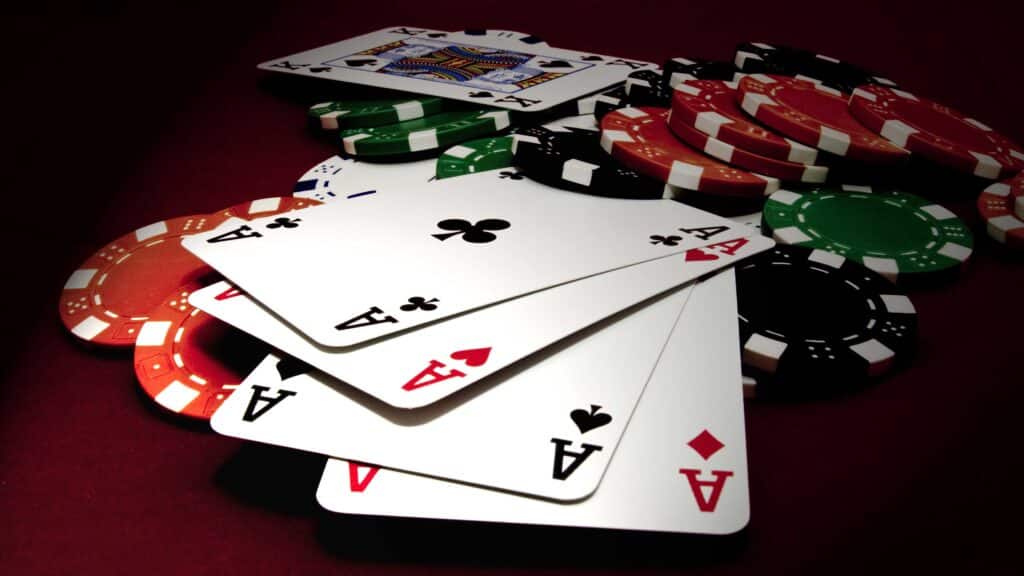
Spanish 21 is a blackjack-family game played without the four ten cards in each deck. Jacks, queens and kings remain, so ten-value cards still exist, but the reduced concentration changes natural frequency, doubling decisions and composition effects. The game compensates with liberal player rules and bonus payouts.
The label does not guarantee one universal implementation. Number of decks, dealer soft-17 rule, redoubling, late surrender and bonus schedule can vary. Strategy must match the exact approved rules.
The missing tens change the deck immediately
A standard 52-card deck contains sixteen ten-value cards. A Spanish deck contains 48 cards because the four tens are removed, leaving twelve ten-value face cards.
| Fresh single deck | Standard blackjack | Spanish 21 |
|---|---|---|
| Total cards | 52 | 48 |
| Aces | 4 | 4 |
| Ten-value cards | 16 | 12 |
| Ten-value share | 30.77% | 25.00% |
| Natural opportunity | Higher | Lower before bonus rules |
The lower ten-value share weakens ordinary naturals and many doubles. It also changes insurance and card-removal effects. A standard blackjack chart cannot simply be reused.
Player 21 normally beats dealer 21
A defining Spanish 21 rule is that a player total of 21 generally wins rather than pushing against a dealer 21. A player natural also usually beats a dealer natural and is paid immediately, subject to the published rule set.
This player-favourable tie treatment offsets part of the removed-tens disadvantage. It also changes decisions near 21 because reaching the total has more value than in conventional blackjack.
The Washington State Gambling Commission lists Spanish 21 as an approved proprietary game owned by Masque Publishing and publishes current rules for regulated use. That official rule record is a better reference than a generic casino summary.
Doubling and redoubling create much of the strategy value
Many Spanish 21 versions allow doubling on any number of cards and redoubling after an initial double. Some allow multiple redoubles up to a defined total wager.
These options can turn marginal drawing hands into profitable aggressive plays. They also increase round exposure. A $10 starting hand can grow rapidly if repeated doubles are allowed.
The correct strategy considers the value of future doubling opportunities, not just the probability of improving with one card. Charts built for ordinary blackjack will miss these branches.
Surrender rules are often more flexible
Late surrender is commonly available, and some versions allow surrender after doubling. The player can sometimes forfeit half of the expanded wager rather than play a poor final hand.
Exact timing matters:
- whether the dealer checks for blackjack before surrender;
- whether surrender is allowed after split;
- whether a doubled hand can surrender;
- whether an ace upcard restricts the option.
These rules can materially alter strategy against strong dealer cards.
Multi-card 21 bonuses are conditional awards
Spanish 21 commonly pays bonuses for specific 21 combinations, such as five-, six- or seven-card 21, and for suited 6-7-8 or 7-7-7. The exact payout and suit treatment vary.
These bonuses influence decisions when several draw paths remain. They do not make every long-card hand favourable; the player still compares the weighted value of all outcomes.
Some jackpots or super bonuses require a specific suited combination and dealer upcard. Read the current table layout because promotional versions can add optional side wagers without changing the base game.
Insurance remains a composition bet
Insurance pays when the dealer’s hidden card is ten-valued. Because the Spanish deck starts with a smaller ten-value share, insurance is generally less attractive from a fresh shoe than in standard blackjack.
Card removal can change the calculation inside a physical shoe. A count designed for ordinary decks is not automatically calibrated for a 48-card Spanish deck.
Online RNG Spanish 21 often reshuffles every round, eliminating practical shoe composition tracking across hands.
Rule combinations determine the house edge
Dealer hitting soft 17, number of decks, redouble limits and bonus schedule interact. One favourable rule cannot be evaluated in isolation.
A regulated game description should identify decks, shuffle frequency, payouts and all applicable rules before play. The UK Gambling Commission’s RTS 3 disclosure framework provides a useful benchmark for remote card games.
Use a strategy calculator or chart explicitly labelled for the same dealer and doubling rules. Small deviations can cost more than the base edge.
A practical Spanish 21 strategy process
- Confirm that all four tens are removed from each deck.
- Record deck count and dealer soft-17 rule.
- Check whether player 21 always wins ties.
- Read double, redouble and surrender limits.
- Copy the complete multi-card and suited-21 bonus schedule.
- Use a Spanish 21 chart for that exact configuration.
- Separate optional side bets from the base game.
- Track total stake after redoubles and splits.
Spanish 21 can be competitive when the player uses the correct rule-specific strategy. Its generous options do not make it ordinary blackjack with a few bonuses; removing the tens changes the entire conditional probability structure.
Dealer soft-17 rules interact with the missing tens. A version where the dealer hits soft 17 requires a different strategy from one where the dealer stands, and bonus payouts do not erase that difference. The number of decks and whether redoubling is permitted can move several borderline decisions. A chart should name all of these assumptions prominently.
Splitting rules deserve separate attention. Some implementations allow repeated splits, doubling after split or special treatment of split aces. Player 21 after a split may receive ordinary even-money payment rather than a natural or bonus award. The visible “player 21 always wins” statement should not be read as a promise that every 21 receives the same payout.
Multi-card bonuses are attractive because they reward unusual hands, but strategy should not chase them without calculation. Holding a weak total merely because five-, six- or seven-card 21 is possible can sacrifice more expected value than the rare bonus adds. Correct tables incorporate the bonus schedule automatically.
Online versions may use continuous fresh shuffles or RNG dealing, while live tables use a physical shoe. Card counting assumptions apply only when dealt cards remain out of play long enough to affect later composition. Even then, Spanish decks require a specialized count and betting system; a standard blackjack running count does not translate directly.
Bonus payout wording can vary between a fixed award and a multiple of the wager. A five-card 21 paying 3:2 should be checked for whether it replaces the ordinary even-money win or adds to it. Suited and spade bonuses may have minimum stakes or table maximums. The complete paytable, not a promotional summary, determines the credit.
Strategy errors can be measured by expected-value loss rather than simply counted. Missing a redouble or surrender opportunity can be more expensive than a close hit-versus-stand mistake. A Spanish 21 trainer should report the size of the error and identify which rule assumption produced the answer.
Side bets such as Match the Dealer use the same initial cards but a separate payout schedule. Their large top awards do not imply that the base game became more favourable. Record side-bet turnover independently so its cost is not hidden inside the main-hand result.
Before switching tables, save the current rules. Two Spanish 21 games in the same casino can use different decks, dealer procedures or bonus caps, making one strategy chart unsuitable for both.
Related GambleRoad guides explain blackjack variants, payout rules, basic strategy and shoe composition.